
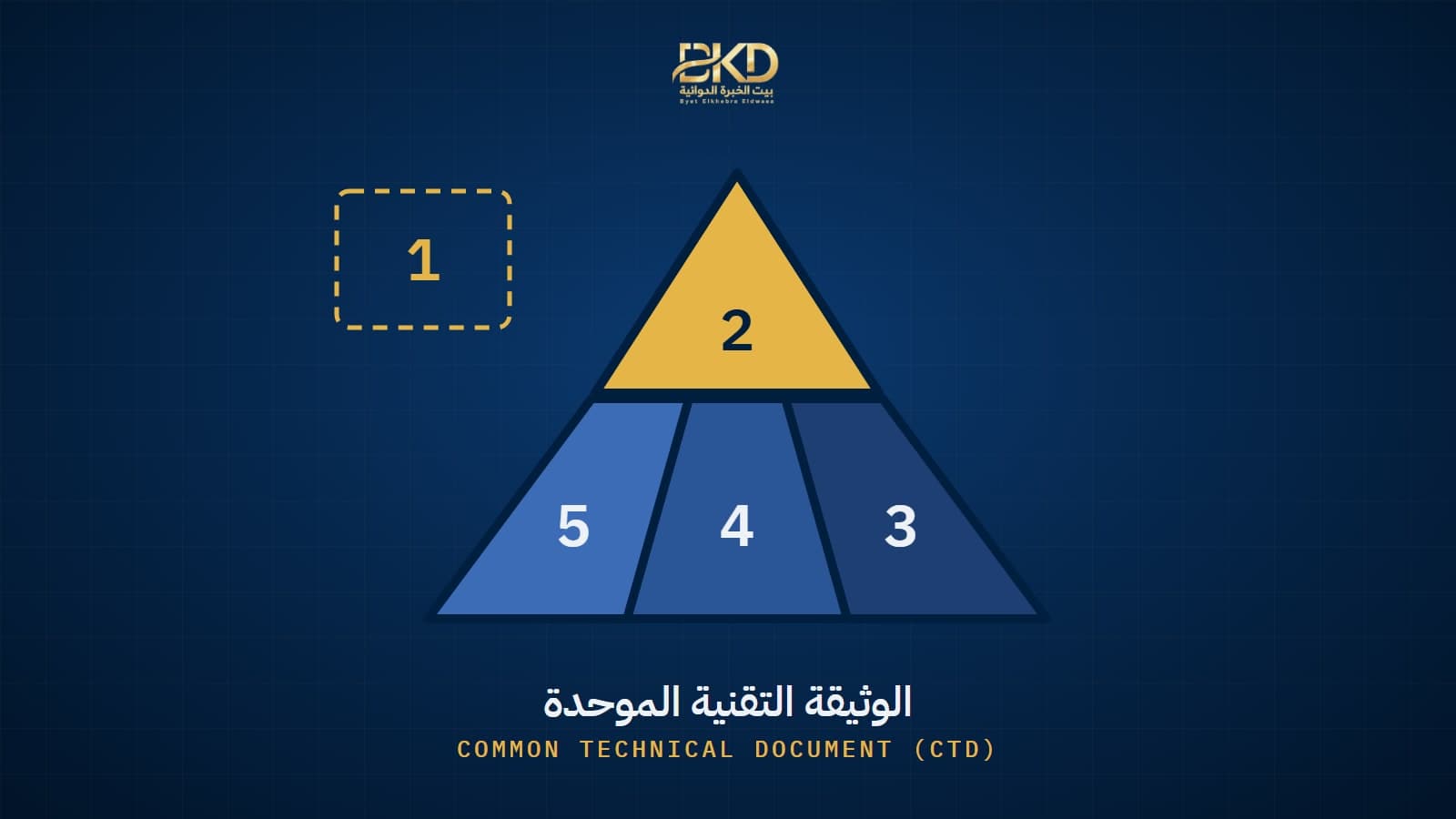
The Common Technical Document (CTD) is the standard format for organising the information in a medicine's registration dossier. Rather than rebuilding the same file for every country, companies arrange their data once in a structure that many regulators already recognise. This guide explains why the CTD exists, what the five modules contain, how they depend on each other, which mistakes commonly trigger queries, and how to plan and quality-check a dossier.
What is the Common Technical Document and why was it created?
The CTD is a harmonised format for the technical part of an application to register a human medicine. It was developed by the International Council for Harmonisation (ICH) and is published as guideline ICH M4. It fixes how the information is organised, meaning which summary or study report belongs in which numbered section and in what order.
Before the CTD, authorities in different regions asked for different structures. A company applying in several places had to reorganise, retitle and sometimes rewrite the same data for each one, and every rewrite risked introducing an inconsistency. With a common structure, the studies, reports and summaries can be prepared once and reused with limited change.
It helps to be clear about what the CTD does not do. It describes organisation, not requirements: ICH M4 does not say which studies a particular product needs, because that is decided by the authority and by the scientific guidelines for the product type. M4 is also accompanied by quality, safety and efficacy parts (M4Q, M4S and M4E) that explain what belongs in Modules 3, 4 and 5 and in the related summaries. These guidelines are revised from time to time, so work from the current versions.
What are the five CTD modules?
The CTD has five modules. Module 1 is regional, while Modules 2 to 5 share one structure wherever the CTD is used.
- Module 1: regional administrative and prescribing information. Documents set by each national or regional authority, and therefore not harmonised.
- Module 2: overviews and summaries. The reviewer's map of the dossier.
- Module 3: quality. How the drug substance and the drug product are made, controlled and kept stable.
- Module 4: nonclinical study reports. Pharmacology, pharmacokinetics and toxicology.
- Module 5: clinical study reports. Studies in humans, including bioequivalence, efficacy and safety.
The standard CTD diagram draws the harmonised modules as a triangle and keeps Module 1 outside it, because Module 1 differs from region to region. For a generic product the weight usually shifts: Module 3 tends to be the largest part, while Modules 4 and 5 may be limited to what the authority asks for, such as bioequivalence reports in Module 5. Confirm the expectations for your product type and market before you plan the content.
What does each CTD module contain?
Module 1: the regional part
Module 1 holds what an authority needs to process the application and approve the product information. Typical examples are the application form, a cover letter, the proposed leaflet and labelling, packaging mock-ups, evidence of manufacturing and GMP status, and authorisation documents for the parties involved. The exact list, order and format are set by each authority and can change, which is why Module 1 is the part most often rebuilt when a dossier moves to another market.
Module 2: the summaries
Module 2 is usually read first. The quality overall summary condenses Module 3, the nonclinical overview and summaries condense Module 4, and the clinical overview and summary condense Module 5. A good Module 2 does more than shorten: it interprets the data, justifies the specifications and development choices, and points the reviewer to the exact place in Modules 3 to 5 where the evidence sits.
Module 3: the quality data
Module 3 has two main parts: the drug substance (section 3.2.S) and the drug product (section 3.2.P). Both cover how the material is manufactured, controlled and specified, its reference standards, its container closure system and its stability. The drug product part also covers composition and pharmaceutical development, which explain why the formulation and process were chosen. For many products, especially generics, Module 3 carries the bulk of the evidence.
Modules 4 and 5: the study reports
Module 4 holds nonclinical reports grouped under pharmacology, pharmacokinetics and toxicology. Module 5 holds clinical study reports grouped by study type, plus a table of all clinical studies. A new active substance, a generic and a biosimilar need different amounts and types of evidence, so confirm what the authority expects for your product type.
How do the CTD modules depend on each other?
A CTD dossier is one argument told at several levels of detail. The data sit in Modules 3, 4 and 5, Module 2 summarises them, and Module 1 presents the product to the authority and the prescriber. When one level disagrees with another, the reviewer has to ask which is right. The main dependencies are these:
- The quality overall summary must match Module 3: composition, specification limits, test methods, process descriptions, batch data and the shelf life they support.
- The nonclinical and clinical overviews must reflect Modules 4 and 5, including the conclusions about safety, dosing, and benefit and risk.
- The product information in Module 1 must agree with the rest of the dossier: composition, storage conditions and shelf life with Module 3, and indications and dosing with Modules 2 and 5.
- Cross-references must lead to the right place, so every statement in Module 2 that relies on a report points to the correct section of that report.
These links also explain why one change spreads. Altering a manufacturing site, a specification limit or a pack size can touch Module 3, the quality summary, the labelling and the administrative documents in Module 1 at the same time. Treat the dossier as a connected set and check every affected place whenever one of them changes.
What are the most common CTD mistakes?
Many queries on a dossier come not from missing science but from avoidable problems of consistency, completeness and currency:
- Module 2 and Module 3 do not match. A specification limit, process description, batch number or shelf life is stated one way in the summary and another way in the source section.
- Regional documents are missing or out of date. Certificates, licences and authorisation letters that have expired, name the wrong party or no longer match the application are a common reason for the authority to ask for replacements.
- Outdated templates and guidance. A summary template, stability format or guideline version that has since been replaced makes the dossier look unprepared and may omit information the authority now expects.
- Content copied from another product. Product names, strengths, manufacturer addresses or study numbers carried over from an earlier dossier and never corrected.
- Stability data that do not fit the market. Studies run at storage conditions that do not match the climatic zone of the target market, or that do not support the proposed shelf life and storage statement.
- Gaps without justification. A section left empty or marked not applicable, with no explanation of why the data are not provided.
- Quality control left to the end. When review starts only after everything is written, there is no time to repair structural problems, so the authority finds them instead of you.
A careful second reader who compares each summary with its source will catch many of these before the authority does.
How do you plan and quality-check a CTD dossier?
A dossier is easier to control when it is run like a project, with a clear order of work and checks at every stage.
- Confirm the target and the route first. Establish the authority, the product category, the type of application and the format the authority accepts before writing any section.
- Run a gap analysis. Compare the documents you hold with the CTD structure, mark gaps, outdated material and inconsistencies, and note what can be reused.
- Agree the key facts once. Keep one controlled list of product name, strength, composition, specifications, shelf life, storage conditions, pack types and manufacturer details, and use it in every module and in the labelling.
- Write from the source upward. Finalise the Module 3 sections and the study reports first, then write the Module 2 summaries from them, and check the labelling against both.
- Review in stages. Combine the author's own check, a peer review against the source documents, a consistency review across modules, and a final check of the assembled dossier for structure, numbering and cross-references.
- Record the checks. Keep the findings, corrections and sign-off, because they help when the authority asks questions and when the product later changes.
An independent reviewer who did not write the dossier tends to find what the authors miss, because they read what is on the page rather than what was intended. Once the content is complete, consider an external review of the draft, such as a CTD dossier review before filing.
How does the CTD relate to the eCTD and to local requirements?
The CTD is the content structure. The eCTD is the electronic format, defined in ICH M8, used to deliver and maintain that same content with an XML backbone and lifecycle tracking. A CTD can be submitted on paper, as PDF files or as an eCTD, depending on what the authority accepts. The article on eCTD vs CTD explains the difference in detail.
Module 1 and authority expectations vary and change over time. Dossiers for Egypt and the wider region are generally prepared in the CTD format, but the Egyptian Drug Authority (EDA) sets its own current requirements for application documents, product information and the format in which a dossier is accepted, and these may differ from those of the authority a dossier was first written for.
Treat this article as a framework rather than a checklist for any one authority: confirm the current EDA requirements before you assemble Module 1, or ask a regulatory consultant to check them for your product category. The overview of pharmaceutical products registration shows where the dossier sits in the wider process.
Next step: build a dossier that holds together
The Common Technical Document gives every dossier the same skeleton: regional information in Module 1, summaries in Module 2 and the evidence in Modules 3 to 5. Many problems arise in the links between those parts, so plan the content, agree the key facts once and review in stages. Module 1 requirements and the submission format should always be confirmed with the authority.
We support teams at each stage, drawing on 20+ years of regulatory experience. Our CTD dossier preparation service covers authoring, gap analysis and quality control before filing, and our CTD and eCTD practical training helps your own team learn to build and check dossiers. If you are new to the field, start with the guide to what regulatory affairs involves.