
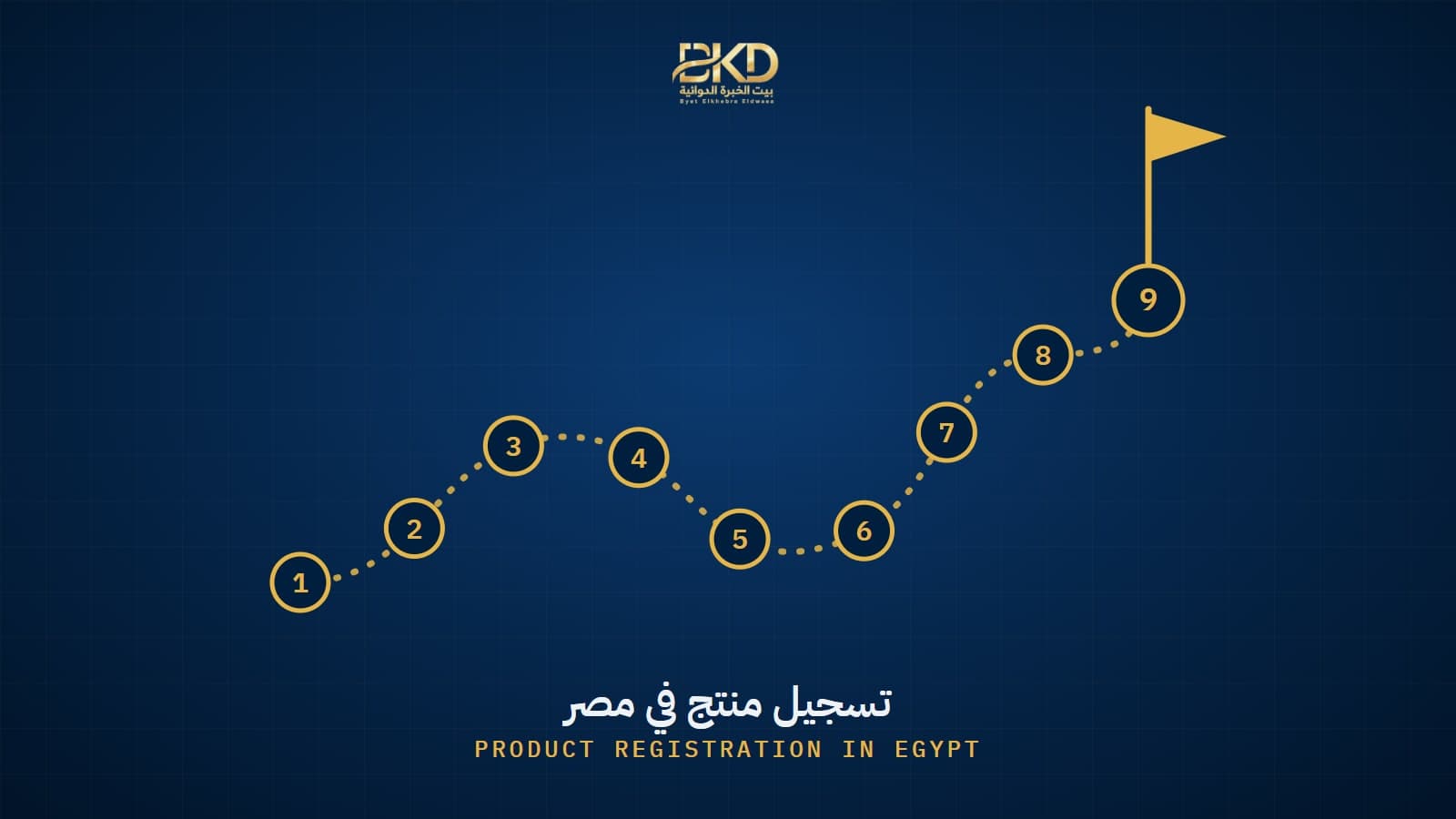
If you want to register a product in Egypt, the route depends first on what the product is: medicines, medical devices, cosmetics, food supplements and disinfectants each follow a different pathway. This roadmap takes you through nine steps, from classification to launch, then lists common mistakes, a checklist and questions to ask a consultant. Every Egypt-specific point is general guidance, so confirm current requirements with the Egyptian Drug Authority (EDA) before you act.
Step 1: Define the product and its classification
Classification decides almost everything that follows: which department reviews the file, who may apply, which evidence is expected, which format the dossier takes and how the label must look. Define the product precisely before anything else: composition, intended use, claims, dosage form or device description, target user and the way it will be sold. Write a one-page product definition and ask the authority or an adviser to confirm the category before you commission studies or artwork.
As a first orientation, the main categories are:
- Medicines, new or generic, assessed on quality, safety and efficacy or comparative evidence: see pharmaceutical products registration
- Biologicals and biosimilars, which add comparability and immunogenicity questions: see biological and biosimilar registration
- Medical devices and IVDs, classified by intended purpose and risk: see medical device and IVD registration
- Cosmetics, defined by a purpose of cleansing, perfuming, protecting or changing appearance: see cosmetics registration
- Food supplements, which depend on ingredients, dose, form and claims: see food supplements registration
- Disinfectants and antiseptics, which depend on where they are used and what they claim: see disinfectants and antiseptics registration
Borderline products need extra care because a claim can change the category. A shampoo that claims to treat hair loss, a vitamin product at a high dose or a hand sanitiser marketed for wound care may be handled as a medicine rather than a cosmetic, supplement or disinfectant. The authority's definitions decide, not the way you describe the product in marketing, so settle the classification early and revisit it whenever the claims change.
Steps 2 and 3: Confirm the requirements and set up the local applicant
Step 2: Confirm the authority and the current requirements
For medicines and many other health products the competent authority in Egypt is the Egyptian Drug Authority (EDA). For some borderline categories, more than one body can be involved depending on classification and claims. Ask which department handles your product, which forms and document lists apply today, whether the manufacturing site is assessed separately and how submission is made. Requirements change, so rely on the authority's current publications or an adviser who tracks them, never on an old checklist passed on by another company.
Step 3: Set up the local applicant
Foreign manufacturers generally cannot apply on their own. They work through a company established in Egypt that holds the registration or acts as authorised representative or importer, depending on the category. This may be your own subsidiary, a distributor or a licensed importer. Check that its licences cover your product category, then settle in a written agreement and a letter of authorisation who deals with the authority, who imports, and who handles labelling, complaints, recalls and pharmacovigilance. Changing the registration holder later typically needs the authority's approval, so choose the partner as if the choice were permanent.
Steps 4 and 5: Gap-check your documents and prepare the dossier
Step 4: Gap-check what you already hold
Before writing anything, compare your documents with the content expected for your category and record each gap with an owner. For a medicine that usually means quality data (specifications, validation, stability supporting the proposed shelf life), comparative or clinical evidence, GMP evidence for every site, certificates from the country of origin and draft labels. For a device it means a technical file, risk management, test and clinical or performance evidence and a quality system certificate such as ISO 13485. For cosmetics, supplements and disinfectants, formula, specifications, safety evidence and label claims lead the list.
Inconsistencies hurt as much as gaps. Check that product names, strengths, specifications, addresses and manufacturer details are identical across certificates, reports and labels.
Step 5: Prepare the dossier in the expected format
For medicines the expected format is generally the Common Technical Document (CTD), with its administrative, summary, quality, non-clinical and clinical modules; the guide to the Common Technical Document explains the structure. Module 1 carries country-specific administrative information, so a dossier prepared for another market is a starting point, not a finished file. Devices, cosmetics, supplements and disinfectants usually follow the authority's own file structure. Whether paper, electronic or eCTD submission is accepted depends on current rules.
Steps 6 and 7: Submit, track and answer technical queries
Step 6: Submit and track
Submit through the channel and in the form the authority specifies, using staff authorised to act for the applicant. Keep a log of what was submitted and when, the reference given, the current status and the next action. A file may pass through an administrative check, technical review of quality and clinical or performance data, assessment of the manufacturing site and, for some products, pricing or other approvals that run alongside or after the technical review.
Step 7: Handle technical queries
Reviewers often ask questions, so treat each query as a small project: record the question, assign an owner, gather evidence from the manufacturer and answer every point in a structured reply with annexes. Keep the dossier consistent: if an answer changes a specification or a label, update every place where it appears. Meet the response deadline the authority sets, and ask for clarification when a question is unclear rather than guessing.
How long does registration take?
No fixed duration applies to every product. It depends on the category, how complete the dossier is at first filing, how quickly overseas manufacturers supply documents, the authority's workload and how fast queries are answered. Build your launch plan around these variables and treat any single figure you are quoted with caution.
Steps 8 and 9: Approval, post-approval duties and launch
Step 8: Approval and post-approval duties
Approval starts the lifecycle rather than ending the project. The registration holder typically has to renew in time, notify or obtain approval for changes (a new manufacturing site, a revised specification, a different pack, new label text), handle complaints and recalls and, for medicines, run a safety monitoring system. The article on pharmacovigilance for registration holders explains what that involves. Put renewal dates and variation triggers in a calendar owned by a named person.
Step 9: Plan launch logistics and Arabic labelling alongside registration
Do not leave the practical side until approval. Draft Arabic text for labels and leaflets early, check it against the dossier and keep it consistent with the approved information. Line up a storage and distribution partner suited to your temperature and licensing needs (the guide to GSDP for pharmaceutical warehouses shows what to look for), plan import and supply arrangements, and ask whether the authority expects specific pack coding or traceability features. Pricing and similar commercial approvals for some products may run alongside or after registration.
Common mistakes when you register a product in Egypt
These errors cause most avoidable delay:
- Wrong classification. A dossier built for the wrong pathway has to be rebuilt, and a later change in claims can move a product into another category.
- Incomplete or inconsistent documents. Specifications that differ between sections, names and addresses that do not match across certificates, and expired, unsigned or untranslated certificates all trigger queries.
- Late labelling work. Arabic text and artwork left until after approval often contradict the approved information and force reprints.
- Unrealistic planning. Assuming a fixed duration, ignoring how long overseas manufacturers need to supply documents, and promising launch dates or tender commitments before approval.
- Choosing the local partner on price alone. Without written responsibilities, complaints, recalls, renewals and pharmacovigilance fall between two companies.
- Reusing another market's dossier unchanged. Country-specific parts, formats and certificates usually differ.
- Losing track. Unanswered queries and missed renewal dates can stall a file or let a registration lapse.
A practical registration checklist
Before you file, you should be able to answer yes to each of these:
- The product is defined and its classification confirmed with the authority or a qualified adviser.
- You hold the current requirements and document lists, with the date you obtained them.
- A local applicant is chosen, its licences cover your category, and the agreement and letter of authorisation are signed.
- Every manufacturing and testing site is listed, with valid GMP or quality system evidence.
- Quality, safety and efficacy or performance data are complete and consistent.
- The dossier follows the expected format and has been checked for cross-references and matching details.
- Certificates such as free sale or pharmaceutical product certificates are current, and legalised or translated where required.
- Arabic labels and leaflets are drafted and match the dossier.
- A submission log, a query tracker and named owners are ready.
- A post-approval calendar covers renewals, variations, complaints, recalls and pharmacovigilance.
How to choose a regulatory consultant
A consultant can save you from the mistakes above, but only if the relationship is set up properly. Questions worth asking:
- Which product categories and procedures has the team handled recently, and how does the firm keep up with current requirements?
- Does the firm confirm requirements with the authority and record its assumptions in writing, or rely on memory?
- Who will do the work, in which roles, and how will you be kept informed?
- What is included, what is excluded and which third-party charges would you pay separately? Is the scope in writing?
- Does the firm explain the variables that affect timing and outcome, rather than promising approval or a fixed date?
- How does the firm protect your technical data, and will you receive the final files and working documents?
- Can the firm support the later stages as well: renewals, variations and pharmacovigilance?
Next step: turn the roadmap into a plan
Registration is a chain of connected decisions: classify correctly, confirm current requirements, appoint the right local applicant, close documentation gaps, file a consistent dossier, answer queries with evidence and plan the lifecycle from the start. Tell us what the product is and which documents you hold, and we can help you work out the likely pathway and the gaps.
Our product registration services cover medicines, biosimilars, devices, cosmetics, supplements and disinfectants, from the first gap review to approval and lifecycle changes, backed by 20+ years of regulatory experience in Egypt and MENA. To discuss your product, contact our team.